Published · Updated

A business using a Hong Kong company to expand overseas may consider a name change after a brand refresh, a change in direction or a group restructuring. This affects the company’s statutory record and can require follow-up with banks, contracting parties and payment platforms. This guide covers a local private company incorporated in Hong Kong. A non-Hong Kong company registered here follows a different process, so confirm the company type before choosing a form. This is general procedural information, not advice on a particular company’s articles or circumstances.
Distinguish the statutory company name from the brand name
Check the name in the Companies Registry, then list the other names the business uses: its brand, products, domain, social accounts and names on customer-facing documents. They may match, but they serve different purposes. Changing the registered company name changes its statutory identity; it does not automatically rename a product or website, update social accounts, or protect a trademark.
Ask what needs to change: the company name on the register, or only the name customers see? If only the brand is changing, treat website, product and social updates as separate tasks and check whether any legal filing is needed. Do not assume that a brand refresh and a statutory name change are the same job.
This procedure is for a local private company incorporated in Hong Kong. A company formed elsewhere and registered here as a non-Hong Kong company has a different filing route and deadline. Confirm the type from the company’s records before preparing a form. Make a change inventory covering company and Business Registration records, contracts and invoices, brand, website and email; assign an owner to each update.
A company name search is not a trademark search
Use the Companies Registry’s e-Search Services and select Exact Name Search. Enter the complete proposed name, including spaces, punctuation and ending words. The search identifies matching names in the register, but not registrability; the Registrar decides after processing Form NNC2 and may reject an incorrect or unacceptable name. Save the query and result for version control, not as approval. See the Companies Registry’s name-change procedure.
A Chinese company name must use traditional Chinese characters. A company may have a Chinese name, an English name, or both as separate names, but Chinese characters and English letters cannot be combined in one name. For a limited company, the final word in the English name must be Limited; Ltd is not accepted as the final word. Check the full formal name character by character. The Companies Registry’s local company name FAQ explains the rules.
Company registration and trademark registration are separate. Registering a company name does not create trademark rights, and a clear company-name search does not establish that use avoids another party’s intellectual property rights. If the name will be used as a brand, search the Intellectual Property Department’s Trade Marks Register separately and seek appropriate advice where needed.
Special resolution, NNC2 and the 15-day deadline
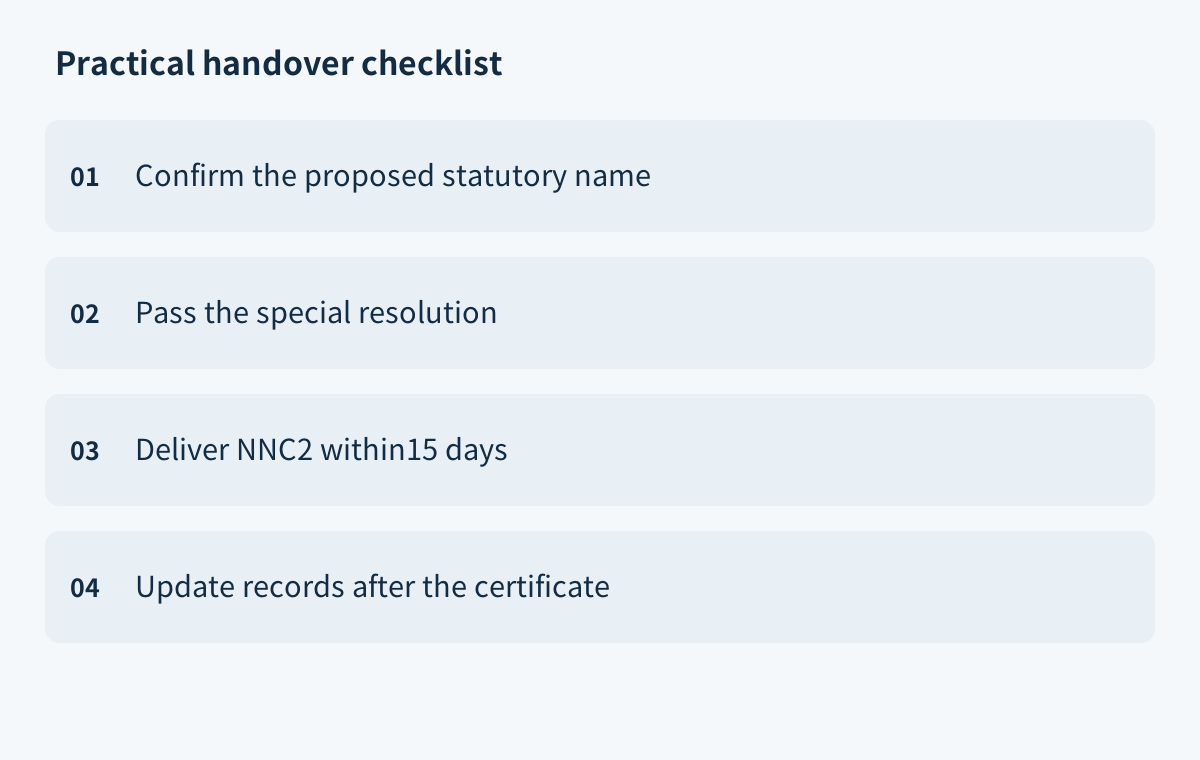
A local company must pass a Special Resolution to change its name. Check the company’s articles for notice, voting, recordkeeping and signing requirements before a meeting or written resolution. These depend on the company; do not assume a generic voting threshold or signing method. Seek advice on the specific procedure if unclear.
Deliver Form NNC2, Notice of Change of Company Name, with the applicable fee within 15 days after the Special Resolution is passed. Check the existing and proposed names, resolution date, company particulars and signatures against the latest electronic form. Use one consistent version of the proposed name. Record the resolution date, filing owner, checker and receipt; a tracker does not extend the deadline.
The Registry specimen is Specification No. 1/2023, dated December 2023. It shows the Business Registration Number, existing and proposed names, resolution date and signature fields. Its notes require a director or company secretary to sign and say to confirm that the signatory’s appointment has been notified to the Registrar. If only the Chinese name changes, the specimen instructs the company to enter the retained English name in the proposed-name field. Treat the sample as a reference and check the current NNC2 specimen and completion notes and e-form.
For a name change, the Special Resolution and related alteration to the articles need not be delivered to the Registry; this exception does not cover every company resolution. NNC2 is for a company incorporated in Hong Kong. A registered non-Hong Kong company follows a separate process, including Form NN10, so confirm the company type before choosing the form.
Confirm the effective date and records after the certificate is issued
The new name takes effect on the issue date of the Certificate of Change of Name, not the resolution date or NNC2 submission date. Check the new name and issue date on the certificate and retain a copy. The Companies Registry says electronic and paper certificates have the same legal effect.
Then check that the Companies Registry record reflects the new name. For a local company, the one-stop notification arrangement transmits relevant information to the Inland Revenue Department after registration or recording. The Business Registration Office normally posts an amended Business Registration Certificate and any amended Branch Registration Certificate on the next working day after the certificate is issued. This government process does not automatically update banks, payment platforms or other counterparties. See the one-stop notification FAQ.
Compare updated records against the old and new names, company identifiers and certificate date. Resolve discrepancies before notifying others. If an expected certificate has not arrived, follow the Registry’s instructions to check delivery or enquire. A submitted form alone is not evidence that the government record is complete. Track government and external updates separately.
Updating banks, contracts and payment platforms
Build a checklist from the company’s relationships: bank accounts and financial services, payment platforms, key customers and suppliers, contracts, invoices, website legal notices and contact details. This is an operational tool, not a list of statutory filings prescribed by the Companies Registry. Ask each institution or counterparty which documents it requires, how to submit them and its processing time; one organisation’s procedure may not apply to another.
For each update, log the owner, contact, required documents, submission date, case number or acknowledgement, and status. Use statuses such as “not contacted,” “submitted,” “awaiting reply” and “verified updated.” Mark an item complete only when a reply or account record confirms the change.
If payments are being collected or existing contracts are being performed during the transition, ask the relevant parties how they will match the former and new names and which details to use while updates are pending. Provide the certificate and amended Business Registration documents when requested, after confirming the recipient’s current requirements. Review quotations, invoices, contract templates, website notices and contact details according to their purpose. Assign an owner and retain confirmation for each item to prevent inconsistent names across internal records, payment instructions and customer documents.
Fees, outstanding items and evidence of completion
Separate the government fee from quotes for outside assistance, trademark searches and other work. No fee amount is stated here; check the Companies Registry’s current fee schedule before filing. Ask who performs each task, what document preparation, filing and follow-up are included, which updates cost extra, and what is excluded. Contact or document support is not automatically legal advice, trademark work or a promise of acceptance.
Keep the Special Resolution, NNC2 submission receipt, Certificate of Change of Name, updated company and Business Registration records, and replies from banks, platforms, customers and suppliers. This is a practical recordkeeping suggestion, not a statement that every item must be filed with the Registry. Retain a former-name/new-name cross-reference, effective date and each institution’s confirmation.
A name change does not reset the incorporation anniversary or erase outstanding filings or contract duties. Check the incorporation date, annual-return deadline, overdue filings and continuing obligations. Except for the year of incorporation, a local private company generally must deliver its annual return within 42 days after its incorporation anniversary. Confirm the actual due date and outstanding status against the company records and the Companies Registry compliance FAQ.
For related context or to ask a question, visit Chan & Chung’s English website. This contact link does not establish that the adjacent work described here is an offering handled by the website owner. Confirm the actual party and scope of any engagement. This article is not legal or tax advice and does not promise an outcome.