Published · Updated

Changing a director on a Hong Kong company is more than updating a name on a form. First classify the event as an appointment, cessation, or a change to a serving director’s registered particulars. Then confirm how the company can decide, the effective date, the filing and deadline, and the separate handover of bank and third-party authority. This guide covers Hong Kong local companies generally. A reader’s location in Taiwan or elsewhere does not change the rules for the Hong Kong company; check its company type and articles.
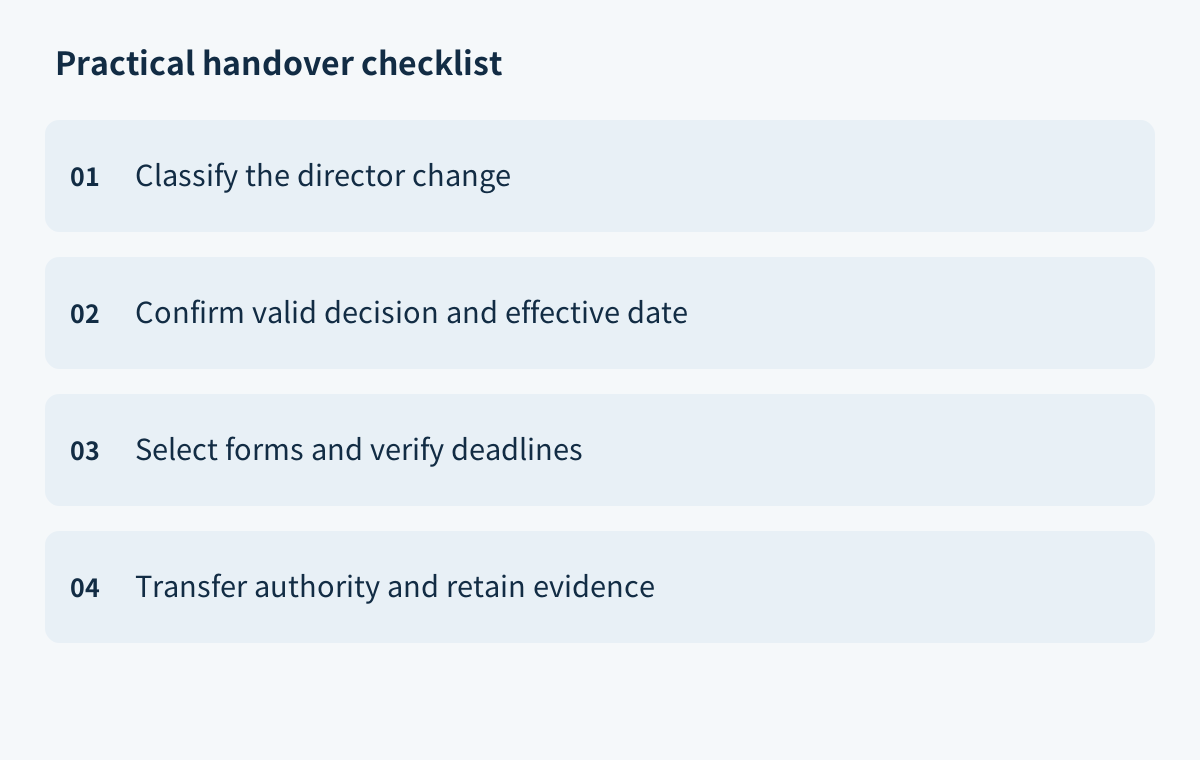
Distinguish Appointment, Cessation and Changes to Particulars
List the company name and Business Registration Number, company type, directors currently recorded at the Companies Registry, the event and proposed effective date. Is someone joining, leaving, or staying in office while their name or other registered particulars change? If one director leaves as another joins, record each person’s role and date separately.
Use Form ND2A for an appointment or cessation; use Form ND2B for a change in a serving director’s particulars. For a resignation, first check whether the company will file ND2A. The resigning director should consider Form ND4 only where there are reasonable grounds to believe the company will not notify the Registrar. If the company files ND2A, the director generally need not file a separate ND4. See the Companies Registry’s director and company secretary FAQ.
Keep the resignation notice, internal approval and Registry filing separate. Confirm the effective date under the articles and align dates across the decision, notice, form and records. A company secretary change is a separate filing; see our guide to company secretary fees and mid-year changes.
Record the change type, filing owner, verified dates and outstanding signatures or submissions. If the resignation date or filing responsibility is disputed, retain correspondence and seek Hong Kong legal advice.
Use the Articles to Make a Valid Decision and Set the Effective Date
Review the articles and any shareholders’ agreement first. Check who can approve, the required process, quorum, voting threshold, notices and preconditions. Neither a board nor shareholder resolution is universally sufficient; the company’s documents and applicable law govern. Seek advice if authority is unclear or disputed.
Company type matters. The Registry says every private company must have at least one natural-person director and a company secretary; the sole director cannot also be that company’s secretary. A non-Hong Kong resident may be a director of a local limited company. An individual secretary should ordinarily reside in Hong Kong; a corporate secretary must have a registered office or place of business in Hong Kong. Recheck these requirements after the change. See the Registry FAQ and our Hong Kong company formation guide.
Set the effective date from the actual documents and procedure, not filing convenience. Retain the signed resolution, minutes or resignation notice. Record the signature, notice receipt, approval and effective dates separately; they may differ. If approval is incomplete or a notice is disputed, mark the change pending.
A decision pack should include the relevant articles, signed decision or notice, approval record, evidence for the effective date and the next filing owner. It should identify who decided what and any missing approval or signature; a completed form does not replace the company’s decision record.
Choosing Between ND2A and Related Forms
Choose by asking whether the office changed or only the particulars did. The Companies Registry’s specified forms list names these forms:
| Form | General use | Key point |
|---|---|---|
| ND2A | Director appointment or cessation | Due within 15 days after the event |
| ND2B | Change in serving director’s particulars | Due within 15 days after the change |
| ND4 | Resignation notice by a director or company secretary | Director checks whether company will file ND2A |
| ND5 | Nomination or cessation of a reserve director | Reserve-director matters only |
| ND7 | Change in a reserve director’s particulars | Reserve-director matters only |
| ND8 | Resignation of a reserve director | Reserve-director matters only |
ND5, ND7 and ND8 do not replace forms for an ordinary director appointment, cessation or particulars change. If the recorded role is unclear, check company records and the current form notes.
ND2A and ND2B cover company secretaries as well as directors; this article explains only the director process. Before filing, check the form version, instructions, event type and required attachments. A wrong form or a reserve-director matter filed as an ordinary director change can require a new submission.
Check Director Consent and Filing Deadlines, Item by Item
On appointment, check ND2A’s consent, name, identification details, capacity and date. The Registry’s ND2A specimen includes a natural person’s consent and confirmation that they are at least 18. For a corporate director, check its name, Business Registration Number and authorized signatory; do not use natural-person signing steps.
For electronic ND2A, a natural-person appointee must be an Individual User subscribed to e-Filing Services; the web-form name and Hong Kong identity card or passport details must match that account. The director signs through the portal’s supported method. For a corporate appointee, an associated Individual User signs, and the entity name and Business Registration Number must match. See the Registry’s e-Filing FAQ. Paper and electronic steps differ, so choose the route first.
ND2A and ND2B must be delivered within 15 days after the appointment, cessation or change, as applicable: 15 days, not 15 working days. Set an internal deadline for checking details and collecting signatures, leaving time for corrections. Do not assume an exception grants an extension; see the director FAQ.
If the outgoing director’s cessation and incoming director’s appointment share an effective date, who signs ND2A depends on its signing date. On the effective date, either may sign; after that date, the incoming director should sign. Check event, effective and signature dates and the signatory’s eligibility.
Keep the signed form, filing receipt, submission date, correction notices and search result. If a form is returned, record why, what changed and when it was resubmitted. A receipt is not proof that registration is complete.
Hand Over Signing Authority, Banking Access and Documents
Updating the Companies Registry does not notify a bank, payment provider, customer or other third party, and does not change their authority records. Inventory systems separately: bank signatories and online users, payment or collection accounts, Registry e-Services users, contract contacts, company files and internal access. Ask each institution what resolution, identity check, application, signature sample or other evidence it requires.
Use a handover table for the institution or system, current authorized people, action, next owner, submission date and confirmation. Mark an application “in progress” until the institution confirms the new status. Do not share a former director’s personal login; request an appropriate individual account or authority for the incoming person.
Transfer the articles, board and shareholder resolutions, key contracts, pending signatures, statutory registers, bank correspondence, filing receipts, and account or service contacts. Record the previous custodian, recipient, file location, next deadline and outstanding external confirmation. Use an approved secure method for personal or commercially sensitive information, and adjust access to actual responsibilities.
Completion means each external authority has an owner and verifiable status. Confirm when former access ends, when the incoming person can act, and whether contracts or replies remain outstanding. Keep those confirmations for later review.
Check the Registration Result and Outstanding Responsibilities
After filing, use the Companies Registry e-Services Document Index to check whether a document is registered or still marked “pending.” Pending documents appear at the top of the index; a receipt alone does not mean registration is complete. See the Registry’s e-Search FAQ. Record the status and follow up rather than treating a pending filing as an updated company record.
Once registered, review the Company Particulars Report and relevant director filings. Compare names, positions and reported details with the company’s decision records. The report includes current directors; the Document Index has a group for director, company secretary and authorized representative filings. See the Registry’s guide to obtaining company information. Keep the search date, search type, result and any discrepancy in the company record.
If search results conflict with signed documents, preserve the result and receipt, check for a correction request, and ask the Registry or a legal professional about the next step. Avoid duplicate filings or relying only on a submitter’s report. Continue tracking unsigned contracts, internal records, bank authority, payment arrangements and third-party notices; a director-register update does not complete them or transfer every responsibility from the former director.
Search and Handover FAQs
Does a filing receipt mean registration is complete? No. Check that the document is no longer marked “pending,” then verify the company particulars.
Will bank authority update automatically? No. Confirm changes with each bank and other external institution.
Chan & Chung’s English service overview lists director and shareholder changes under company secretary, changes and statutory maintenance. The linked service page describes help preparing director and shareholder change documents and keeping records consistent. This describes that limited document and record scope; it does not replace the company’s decision, Registry filing or updates to banks and other institutions. The site states regulated trust or company services are provided by Intelligent Services Limited, not Chan & Chung Consultancy Services Limited.
For a case-specific assessment, contact us through the website. This article is general information, not legal or tax advice, and no outcome is promised.