
Cross-border teams can agree on scope yet still disagree about response times, delivery rhythm, and what happens when plans change. A shared expectations matrix makes those rules observable: it names channels, working calendars, checkpoints, escalation contacts, and approval steps. Before kickoff, each side can fill out its own version and compare gaps. Use named owners, local times, and due dates; mark undecided items as pending.
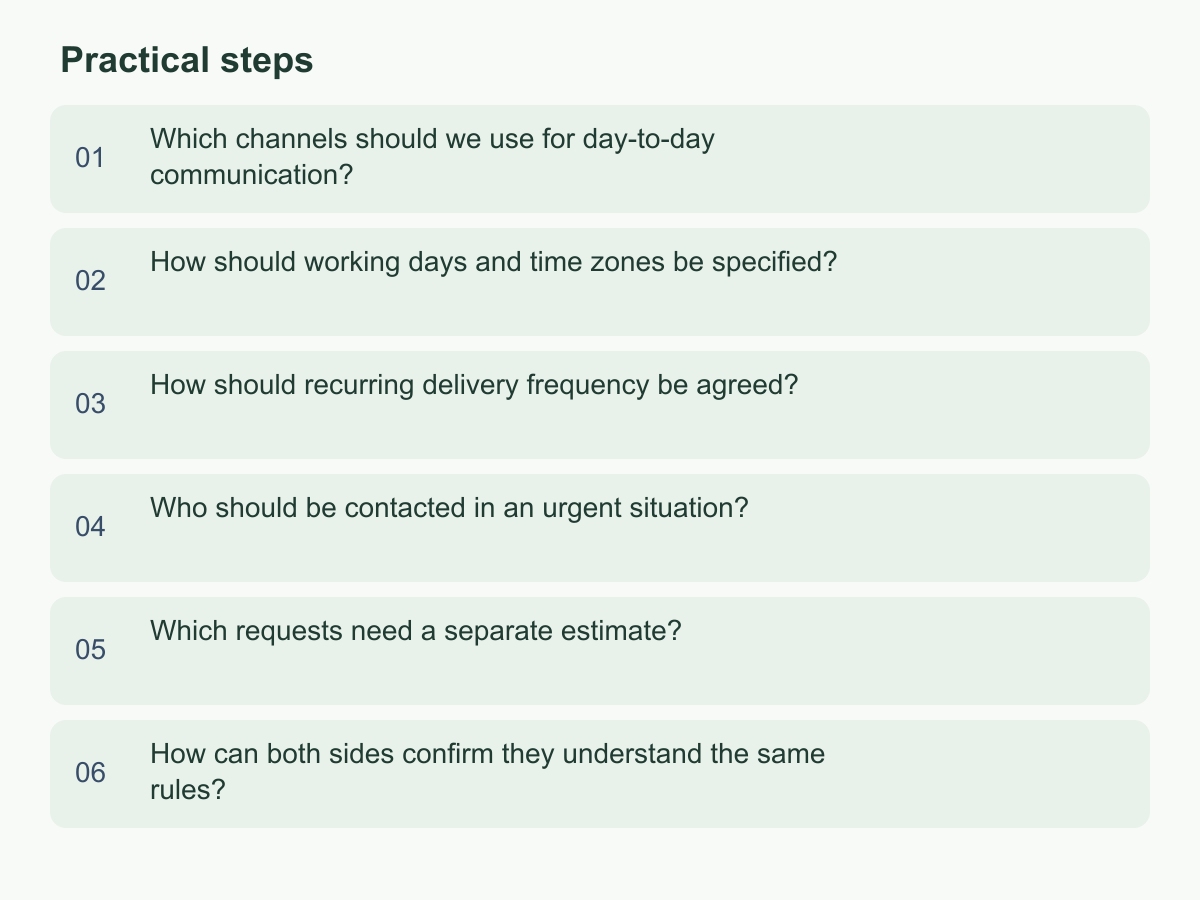
Which channels should we use for day-to-day communication?
Assign channels by purpose: email for decisions, scope, and versions; the project platform for tasks, files, and owners; instant messaging for brief questions and reminders. For each, state when to use it, expected response, and which decisions must be copied into a traceable record. Name a primary entry point and backup, plus who may turn a verbal discussion into a written decision. Group names alone do not establish a working rule.
Distinguish receipt from completion. A recipient can acknowledge a message and state when a fuller response is due. Define formal delivery by platform, file, version, and checklist. If chat, email, and meeting notes disagree, identify the decision source and ask its owner to post the latest link. Record the decision-maker and date for changes and approvals; visibility does not equal agreement.
Before kickoff, test the setup with one routine question and one question with an attachment. Each side demonstrates where to respond and how to identify the next step. If chat is only for reminders, require confirmation of scope changes through the named contact and agreed record. Assign primary and backup checkers, including leave handoffs, and keep team records usable when staff change.
How should working days and time zones be specified?
Name the reference time zone and standard, such as Taipei, Hong Kong, or UTC. List each side’s rest days and regular non-working days, and how company holidays will be announced. State deadlines in one zone; show the other side’s local time in confirmations and meeting invitations. “By Friday close of business” is ambiguous when teams finish at different times.
Agree on a receipt cutoff. Complete materials received before it may enter that day’s schedule; late materials or missing key attachments can be scheduled after confirmation on the next shared working day. Say when a revised estimate will be provided. This does not override deadlines set by a contract or formal document, which should be checked against their source. For meetings, record start time, length, host, fallback, and who will summarize decisions.
For example, a Taipei client and Hong Kong delivery team agree that complete materials received by 15:00 Hong Kong time Wednesday enter Thursday’s review. Show Taipei time too, identify who flags missing fields, and state when a revised estimate is due. If a holiday or closure arises, update the arrangement on the prior working day and align the invitation with the delivery date.
How should recurring delivery frequency be agreed?
Work backward from work-unit size and client review capacity. Set a cadence, then list for each delivery its contents, format or location, sender, recipient, expected time, and the client’s input deadline. Turn “once a week” into checkpoints: for example, a batch on a regular day followed by an agreed feedback window, with later versions scheduled around materials received. Separate drafts, data, and design samples when their completion levels differ; label each for reference, comment, or approval.
Define complete with a checklist: file name, version date, required attachments, open client decisions, and uncovered items. Put questions requiring an answer in one consistent place. If something is unfinished, label what is complete, missing, affected, and when the next update is due. Name who consolidates feedback. If reviewers disagree, ask the designated decision-maker to reconcile comments before the next version.
Suppose Tuesday is for a batch of drafts and Thursday for consolidated feedback. Those are two weekly checkpoints; they do not promise two finished pieces weekly. If feedback is late, the owner reports schedule effects under the agreed rule and proposes revised checkpoints. Mark work that awaits client materials as waiting for input, and record assumptions and version names.
Who should be contacted in an urgent situation?
Define urgent as time-sensitive with a clear operational impact, not simply a deadline approaching. At kickoff, list scenarios that need escalation: an inaccessible delivery link, important information sent to the wrong place, or a meeting or batch about to start without key input. These are examples, not a 24/7 availability promise. State reachable hours, primary and backup contacts, approved channel, and next route if first contact is unavailable.
For each report, include what happened, affected work or delivery, when a response is needed, actions already taken, and where evidence is stored. “Urgent, please call” leaves basic facts unclear. For account, security, or personal-data issues, use an agreed secure channel; never post passwords, full payment details, or sensitive attachments in group chat. The recipient confirms ownership, next update time, and any interim measure. Label an uncertain cause as an initial assessment.
For absences, define backup duties and hours, handoff location, and escalation to the client’s decision-maker. Keep contacts current. “Urgent” alone does not reorder work or change scope. If an incident affects other deliveries, name paused tasks, who will notify affected people, and the next update time. Log the incident and revise the matrix if the path failed.
Which requests need a separate estimate?
List changes needing an estimate before work starts. Triggers may include a new market or language version, file organization outside agreed scope, structural rewrites requested after delivery, missing materials requiring interviews or verification, unavailable third-party systems or permissions, and conflicting reviewer instructions. These examples do not set a universal pricing policy. Agree what must be recorded or paused for confirmation.
Before estimating, clarify the outcome, effect on original delivery, inputs, approver, version, and exclusions. An “impact / options / to confirm” table helps. For example, an extra English page may require deciding who supplies approved text, whether existing pages move, and who consolidates review. Label assumptions and provisional timing; do not present it as a commitment while conditions are open. Ask whether to keep original scope, replace an item, or pause the affected work.
While awaiting approval, record when the change was raised, decision owner, response date, and affected milestone. Do not fold new work into the task or assume silence means approval. List unaffected work that can continue. If the sequence changes, update the checklist and dates, confirm the new version, and link approved changes to their tasks so later reviews distinguish additions and avoid estimating them twice.
How can both sides confirm they understand the same rules?
Use a one-page matrix; give each row an owner, date or time zone, exception rule, and record link. Ask both sides to fill it in independently before the meeting, then compare rows. Replace vague phrases like “respond that day” or “final version” with who does what, by when, and what changes after confirmation.
Test a routine case and an exception. If complete materials arrive, how is receipt acknowledged, when does scheduling begin, and where is delivery visible? If a contact is absent or key information is late, who tells whom, does the schedule change, and where is that update recorded? Ask each side to describe its next action. Give unresolved questions an owner and due date; pending means undecided, not agreed.
Afterward, one owner sends a versioned summary, open actions, and task links. Ask both contacts to confirm or correct it, then record the version date and changes. Revisit affected rows when people, channels, schedules, or scope change, and retain one current version.
At kickoff, assign an owner and confirmation time to each topic, then complete the matrix together. For more about Chan & Chung, visit the English-language website.