Published · Updated

When a Hong Kong company receives notice that its bank account will close, first confirm which accounts and services are affected, when each change takes effect, and how the bank will handle the balance and pending transactions. Notice periods, review windows and balance procedures vary by bank. This guide concerns Hong Kong company accounts; readers in Taiwan should follow the Hong Kong bank’s notice, account terms and applicable Hong Kong rules.
Read the Notice Carefully and Identify the Applicable Deadlines
Save the notice and confirm: company, account and services covered; notice, receipt and closure dates; reason and requested documents; review channel and deadline. If only one account is named, ask whether online banking, direct debits, credit or trade services are also affected. Treat unstated matters as questions for the bank.
Keep a log of each deadline, its source and an owner. Ask whether it uses calendar or business days, the cut-off time and required documents. Review, transaction cut-off, balance handling and service termination may each have a separate date.
Do not assume the Hong Kong Monetary Authority’s December 2023 Code gives a company account 30 days’ notice. It is non-statutory and voluntary, and defines “customer” as a private individual; its closure provisions do not establish a general right for company accounts. Check the company’s terms and notice. HSBC separately accepts reconsideration requests within 21 calendar days after issuing a closure notice, with company identification, the notice-receipt date, an authorised signatory and supporting documents. That is HSBC’s process, not a common deadline. (Code of Banking Practice; HSBC Business Accounts FAQs)
Keep the notice, account terms, log and open questions together. For a rejected first-time application, see this account-opening guide; it covers a different task.
Reconcile the Balance, Incoming Funds and Pending Transactions
Compare the latest statement, online available balance and company ledger. Record the statement date, book and available balances, and differences; figures may not match or be immediately transferable. Inventory relevant customer transfers, marketplace or payment-platform payouts, refunds or disputes, unpresented cheques, scheduled payments, direct debits, payroll, foreign-currency transactions, bank charges and loan repayments.
For each pending item, record currency, amount, expected date, counterparty, reference and status. Ask the payer or platform whether funds have been sent and which details they used. Ask the bank how pending incoming credits, outgoing payments and refunds will be handled before or after closure. A payment may be delayed, returned or require new instructions; rely on the bank’s and provider’s answer for that transaction.
Ask which balance-disposal methods are available, whether a form or authorised-signatory instruction is needed, which transactions settle after closure, how to cancel scheduled debits and how unpaid fees will be collected. Confirm separate maturity or termination dates for deposits and linked services. Until confirmed, do not count the same amount as both available cash and an expected receipt.
Track amount, currency, date, counterparty, reply, owner and status. Separate confirmed items from those awaiting the bank, payer or platform, then reconcile later statements until every difference has a traceable result.
Contact the Bank to Confirm the Available Process
Confirm who is authorised to act for the company and check the bank mandate. Prepare the notice, company identification, account details and transaction records. Send necessary documents through a secure bank-designated channel. Request a case number or written receipt, and record the contact date, department and documents submitted.
Ask which accounts and services are affected and when; review eligibility, deadline, documents and channel; transactions allowed during review; balance and pending-payment handling; and how to obtain statements after closure. If the reason or process is unclear, ask the bank to explain. Other customers’ experiences and online examples are not instructions for this company.
If the bank says transactions are restricted or require approval, ask what remains possible, who may request it and how the decision will be recorded. Do not bypass a restriction or call an unconfirmed route active. For missing documents, confirm format, channel and deadline. If you cannot meet the deadline, ask promptly whether an extension or another process is available, and retain the answer.
After each call, record the date, questions, answers, owner, next action and deadline. Confirm your understanding through a bank-approved channel if needed. A useful handover distinguishes confirmed dates from open questions and shows the next deadline; a case number alone is not enough.
Transition Customers, Suppliers and Platform Payouts
List each payer and payee using the old account: customers, suppliers, payroll and routine expenses, plus e-commerce, payment or merchant platforms. Record the contact owner, required company documents, processing time, last date for using the old account and funds in transit. Include issued invoices, unsettled orders, refunds and recurring debits.
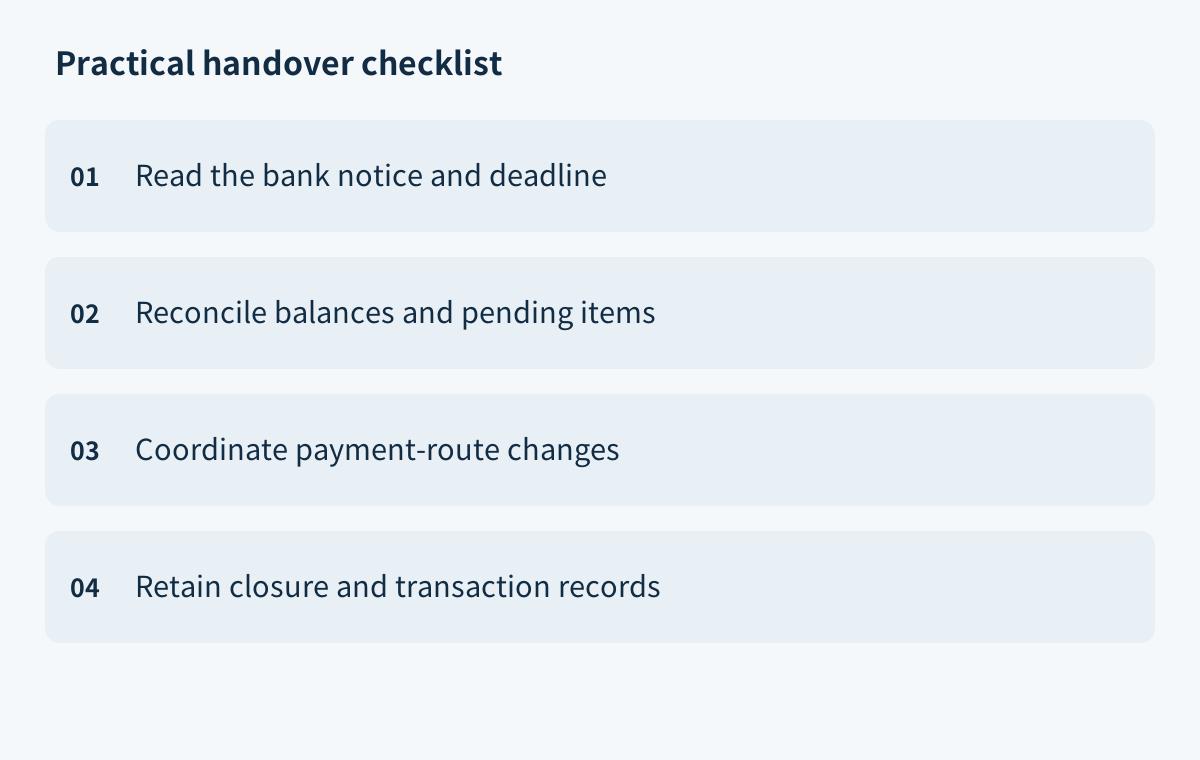
Before submitting new details, confirm the replacement account is active and its provider has confirmed it can receive expected currencies and support required payments. Follow each recipient’s update process, and keep confirmation that the change is complete or under review. Updating one bank, platform or customer does not update other records; pending review does not mean the route is ready for normal collections.
Track old and new details, submission and effective dates, confirmations and remaining payments. If a payer may use old details during the transition, ask the payer and bank whether funds could be returned, delayed or require new instructions. For context on cross-border e-commerce collections and invoices, see this guide. Verify each platform’s settlement terms separately. Compare expected settlement dates with new-account credits; if funds are missing, verify the reference and status with the payer or platform before tracing them.
Assess New Accounts and Alternative Options Separately
Compare another bank account, an external payment service and a merchant account as separate categories. Their eligibility, functions and settlement terms differ; an account that is open may still not replace the old one. Check whether each provider accepts the company’s location, business model, counterparties, expected fund flows and currencies. An application in progress is not a working payment route.
Use one comparison sheet to check: - Account-holder name against company, invoice and platform records; acceptance of expected payers. - Supported payment types and currencies, settlement time and cross-border transfer details. - Conditions or limits on transfers, withdrawals, collections and refunds. - Company and authorisation documents, and how to check application progress. - Fee calculation, who pays, and contact route if a transaction fails. - Terms for restrictions, termination, complaints and record downloads.
Record written confirmations separately from open questions, with source and date. A collection-only option cannot replace an account needed for essential payments or refunds. Verify any required account type with the platform. Keep a backup, but do not assume handover is complete before the bank confirms the old balance and account status. These are external market options; suitability and approval depend on the provider and company.
Retain Records and Track Outstanding Items After Closure
Before access stops, download statements, transaction details, the closure notice, bank correspondence and payment evidence. Ask about post-closure login, replacement documents and later statements. File records by account, month and transaction type; retain original electronic files and restrict access to staff who need them.
Hong Kong’s Inland Revenue Department says a person carrying on a trade, profession or business in Hong Kong must keep sufficient income and expenditure records to determine assessable profits for at least seven years. Prescribed records include bank statements, invoices and receipts. This applies to Hong Kong business records; it does not mean only one type of bank document must be kept after closure. Retain evidence supporting income and expenditure, and check separate requirements if the company has ceased business, is in liquidation or another statutory record period applies. Do not apply one fixed period to every document. (IRD: Record Keeping)
After closure, track incoming funds, returned payments, refunds, platform payouts, uncancelled debits and customers or suppliers whose details remain unchanged. For each, record the expected date, contact, latest reply and next action. Save final evidence and close each item when resolved. If funds were returned, confirm whether they must be reissued and which details to use.
The handover is complete after the bank-directed balance process, transaction reconciliation, external detail updates and record retention are confirmed. For case-specific questions, use the website contact channel. This article is not legal or tax advice and promises no outcome.