Published · Updated

“Hong Kong company document certification” is not one process. The same record may need a different form, signature or authentication depending on the recipient and where it will be used. Ask the receiving authority for written requirements before arranging documents or procedures. Your business’s market is not necessarily the document’s destination. This is general information, not legal or tax advice, and cannot guarantee acceptance.
| Form | What it generally addresses | Confirm |
|---|---|---|
| Certified copy | Copy matches the version shown to the certifier | Original inspection and certifier qualifications |
| Notarization or oath | Specified signing, declaration or copy process | Signer, sequence and required form |
| Apostille | Signature, signer’s capacity and applicable seal or stamp | Eligibility and destination rules |
First ask which form of document the receiving authority accepts
Ask the actual recipient which document it needs, in what form and with what authentication. Give its name and intended use: a Certificate of Incorporation, Business Registration Certificate, director list, company resolution or authorization letter may come from a government register or company records.
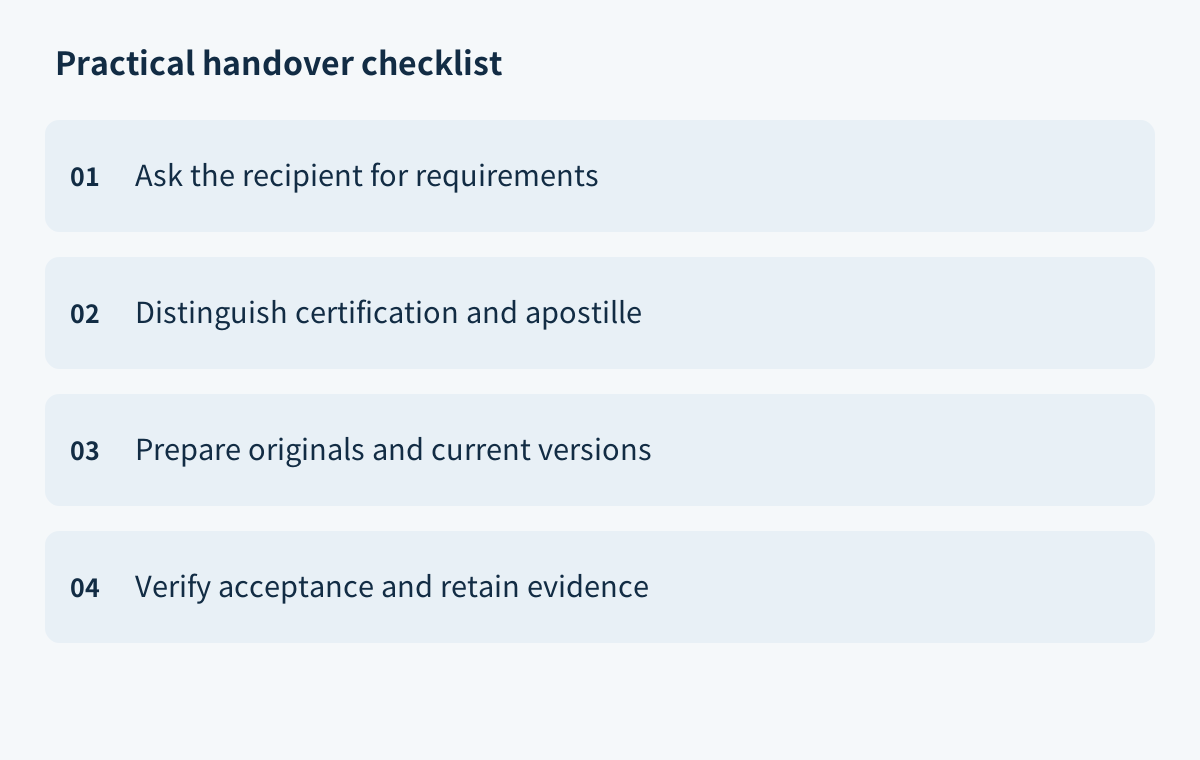
Confirm in writing: document and place of use; original, certified copy of an original, or certified registry copy; who may certify it and any signature, title or seal rules; Apostille, other authentication or consular steps; language and translator qualifications; paper or electronic format, copies and binding; issue date, validity, search date and delivery method.
Hypothetical example: an overseas recipient asks for a Certificate of Incorporation, board resolution and English translation, and requests signer confirmation before deciding whether notarization or an Apostille is needed. This shows how to unpack a request, not a country-wide rule. Record the reply under document/version, signing method, authentication and submission format, with source and owner. Ask for written confirmation if a phone reply is incomplete. Mark each point confirmed, awaiting the recipient or awaiting an external provider. Authentication does not guarantee acceptance.
How do certified copies, notarization and Apostille differ?
A certified copy generally confirms that a copy matches the version shown. Whether the certifier needs a qualification or must inspect an original depends on the recipient. Notarization or an oath involves a designated person handling a document, signature, declaration or copy. The Judiciary accepts certain government-signed public documents and documents signed by Hong Kong notaries public or commissioners for oaths for Apostille applications. Judiciary: accepted documents
An Apostille authenticates a specified signature, the signer’s capacity and, where applicable, a seal or stamp. The Hague Apostille Convention, concluded on 5 October 1961, covers specified public documents used between contracting parties. It does not verify contents or guarantee acceptance. It excludes diplomatic or consular documents and administrative documents directly concerning commercial or customs operations. Objections to accession or special arrangements may affect applicability.
These processes are not interchangeable. Ask whether the recipient wants a certified copy, signature or declaration procedure, or Apostille. If notarization must precede Apostille, confirm both steps. A party-list entry alone does not prove eligibility. Record the sequence and responsible person, keep the Apostille attached and confirm whether scans, electronic copies or separate binding are accepted.
How should you prepare original company documents and versions?
Separate company-held originals, Registry records, and images or certified copies of Registry records. A filed image may not be the company’s original or meet the recipient’s rules. The Registry’s e-Search service provides company data and filed-document images; certified copies of registered documents and search reports can be ordered.
For each item, log name, source, issue or signature date, version, pages, company name and identifier, and attachments. If names, languages or old identifiers differ, confirm the records refer to the same entity and whether a name-change or linking document is needed. Do not alter government-issued text or layout.
Order a certified Registry copy through its process. For a company-held original, identify its custodian, confirm it may be sent and arrange safe return. Ask an external provider whether it needs an original, photocopy, specified printout or bound attachments. For Apostille applications involving certificates listed by the Judiciary, such as incorporation and name-change certificates, attach a company-search printout made within three working days; this applies only to listed certificates. Judiciary: document requirements For formation background, see this Hong Kong company formation guide; it does not describe certification procedures. Handoff: list versions, search date, originals and missing items.
How should you check signatory authority and translation requirements?
Check each signer’s name, title, authority and date against recipient rules. Resolutions, authorizations, declarations and registry certificates may need different signers; confirm witness, seal or prescribed wording requirements. A company signature is not notarization, and a director’s or secretary’s title may not satisfy every recipient.
Before signing, send the document name and blank signature page to the recipient. Confirm who signs, in what capacity, whether signing must be in person or witnessed, whether e-signatures are accepted, and whether signers may sign separately. For notarization or an oath, ask the external professional whether signing must happen in their presence or earlier. Confirm the sequence first.
For translation, confirm language, translator qualifications, certification requirement, and whether it accompanies an original or certified copy. Keep names, addresses, titles, dates, numbers and seal markings consistent; ask how to render legal terms without direct equivalents. Archive the translation with its exact source version. The Judiciary’s translation certification service covers documents or exhibits used in Hong Kong court proceedings; it does not establish a requirement for all cross-border company documents. Record written specifications and open questions.
How should you confirm procedures and costs for the destination?
The destination means where the document will be used, not the business owner’s residence. Confirm the recipient’s accepted form, Apostille eligibility, Convention arrangement and document-specific rules. The Judiciary’s contracting-party list, dated 11 September 2026, includes country notes. A listed country alone does not establish coverage for a specific document or recipient.
If Apostille does not apply or another procedure is required, confirm the next step with the recipient and relevant government or professional provider. Do not assume a fixed sequence. Requirements may include a prescribed form, paper original or validity period; banks, courts and commercial organizations may differ. Keep each requirement with its confirmation source.
The Judiciary lists HK$125 per Apostille application, normally processed in two working days. Overseas postal applications generally take about two weeks after all required documents arrive. The Companies Registry lists HK$130 to certify a document or report copy or extract; paper-copy fees are additional. Judiciary: fees and timing · Companies Registry fees
These are government charges, not an all-in price. Searches, orders, notarization or oaths, translation, courier, bank charges and resubmissions may add costs. Obtain written quotes and separate government fees, provider charges, delivery and unconfirmed amounts. Timing depends on complete documents, acceptance and provider conditions; general times are not individual commitments.
What certification and receipt evidence should you retain after delivery?
For each document, record purpose, recipient, destination, name and version, company identifiers, signer, translation version, certification or Apostille page, and dispatch date. Label each version and note which was sent. Keep the comparison record with the final scan.
Before mailing, check authentication pages, attachments, pagination and binding. Photograph the complete set; keep the postal receipt, tracking number and delivery record. For electronic submission, save the files, upload confirmation, time and recipient’s reply. Match payment receipts and provider records to the application.
If the recipient requests more material or refuses the submission, record the reason, notice date, department and required changes. Confirm requirements before preparing a new version. Preserve the original delivery record, old and revised files, and reason for each change; note which certifications or translations must be repeated.
The handoff should show what was sent, to whom, which steps were completed and whether receipt was confirmed. Mark missing evidence pending. Sending a document, paying a fee or receiving an Apostille does not mean it was accepted. For case-specific questions, use the website’s published contact details. This article is not legal or tax advice and does not guarantee an outcome.