
When a partner introduces a prospective client, chat messages and memory can quickly leave the team unsure when it happened, what the client needs, or who owns the next step. A traceable record links source evidence, client details, registration time, an internal contact, and follow-up. This guide offers a shared-form workflow teams can adapt, starting with essential fields and adding controls where handoffs expose gaps.
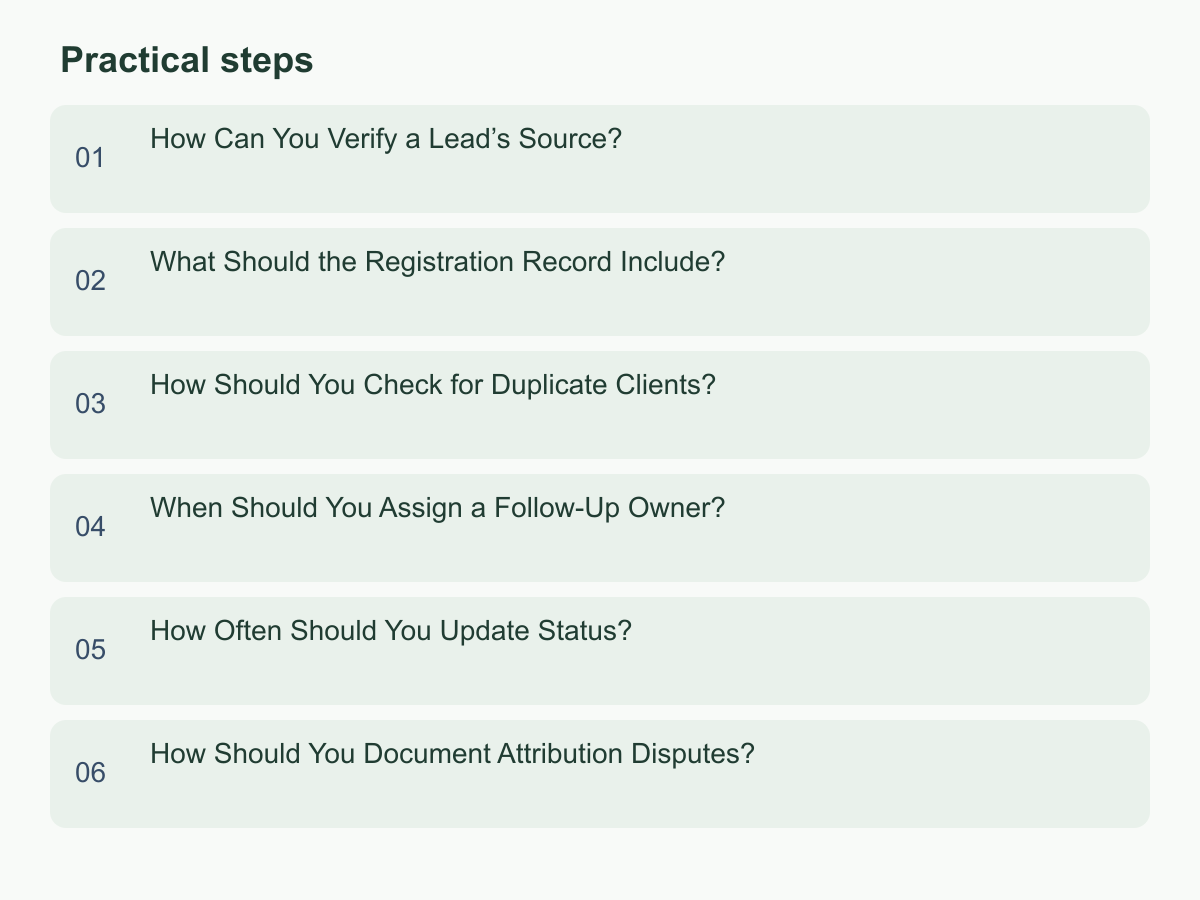
How Can You Verify a Lead’s Source?
Anyone reviewing the record should be able to tell who introduced the lead, how, and when. Separate four fields: referring partner, contact method, first-introduction date, and evidence location. Evidence can be an introduction email forwarded with consent, a form response, a meeting note, or a message summary confirmed by both the partner and recipient. For a phone referral, record the call date, participants, person introduced, and how they agreed to be contacted; send the partner a same-day summary to confirm. Save only what verifies the event, not unrelated attachments or conversation.
Use fixed source categories—partner referral, event contact, joint proposal—with specifics in a note. If several people helped, record the earliest introducer and who enabled contact; forwarding the last file does not itself make someone the source. If consent, provenance, or a partner’s link to a supplied list is unclear, mark “pending,” assign someone to verify it, and leave assumptions out. For example, log a partner’s October 9 introduction email, its reference, and confirmation that the client welcomes contact. Corrections add a timestamp and basis without replacing the original. Limit access to relevant handlers; note who may view partner-supplied data, plus the reviewer and review date while verification is open.
What Should the Registration Record Include?
Capture enough to reconstruct whose need this is and who acts next. Minimum fields: unique ID; company/client; contact name and usable details; factual need summary; partner; evidence link; first-introduction and registration dates; recorder; internal owner; status; next action; review date. Keep company and contact separate, since a role change does not create a new client. Summarize the client’s stated goal and timing. This fictional row illustrates recordkeeping only; it is not a real client or engagement.
| Field | Hypothetical entry |
|---|---|
| Client | Cape Harbor Trading (fictional) |
| Referrer and evidence | Partner Lin; email ref-014 |
| First introduction | 2026-10-09 (assumed) |
| Logged date / recorder | 2026-10-10; colleague Chan (assumed) |
| Internal owner | Colleague Wang; acceptance pending |
| Status / next action | Awaiting first contact; email on 10-11 (assumed) |
Keep introduction and registration dates distinct, as are recorder and follow-up owner. Collect only needed details; use a controlled link when access is restricted. Keep one ID as the record changes. Write the next action as owner, verb, and date—“Wang to email and confirm the need”—rather than “in progress.” Keep source evidence separate from client need. Pending fields need a named owner and review date; do not mark complete if the client, source, or next-action owner is unclear. List multiple contacts separately.
How Should You Check for Duplicate Clients?
Prevent duplicate records without collapsing different needs. Search the formal or common company name, website domain, phone, or email, then compare contact, need, location, and timing. Preserve Chinese or English names, abbreviations, and brands as entered; store alternate names separately. Similar names with different domains or contacts need manual review. Different departments or purchases can have separate opportunity IDs under one client.
When a possible match appears, mark both IDs “possible duplicate,” record the comparison basis, and ask an owner to decide. If the needs match, keep the earlier record as the main entry and add the new partner, introduction date, and evidence as another source event. If not, document the difference and track them separately. Do not merge two fictional businesses solely because their names are similar if websites and contacts differ; a distinct request from another department may remain a separate opportunity linked to the same client. For every merge or split, record operator, time, reason, and reference IDs. Classify checks as exact, partial, or undetermined: confirm and link exact matches, investigate partial matches, and leave undetermined entries separate with missing fields noted. Keep search terms and check date; for corrected contact data, record who changed it and the basis.
When Should You Assign a Follow-Up Owner?
Assign an owner when the lead is actionable, before the client asks or a meeting forces a handoff. Define a threshold: identifiable client, credible source, usable contact or reply route, concise need, and confirmation that contact is welcome. If any item is missing, the recorder owns completion and names who must respond. Once complete, the recorder or intake role assigns one primary internal owner and records assignment time and acceptance. List collaborators separately so responsibility stays clear.
Keep partner relationship manager, recorder, and client follow-up owner separate. The new owner confirms receipt, opens evidence, and accepts a clear next action. If unable, return it with a reason and leave assignment pending; do not mark an unowned record handled. Response targets are internal goals, with defined start, holiday cover, and overdue reminder—not external promises. For example, log a Friday referral and assign backup review; the regular owner confirms it on Monday. Preserve both handoffs. When staffing changes, the outgoing owner or manager records why and summarizes contacts, replies, open tasks, and next review date. Tell the partner who will reply and the client who will contact them. If no one accepts, a duty manager assigns a replacement and records the reason.
How Often Should You Update Status?
Set a review rhythm and log events promptly. Review open records weekly; update the same day for client replies, partner details, owner changes, meetings, or failed contact. Keep labels few and diagnostic: awaiting information, first contact due, contact underway, awaiting client, paused, or closed. They track status; they are not sales stages or evidence of commitment. A next-action field, owner, and date state what happens next.
For each update, record editor, time, event, next action, and owner; a dropdown change alone loses context. If the review date passes without progress, follow up, ask the partner to confirm, pause, or close—and state why. For example, after an introduction email on October 10, set status to awaiting client and an October 17 check date; this is a team date, not an industry standard. Each week, check overdue records and those without next actions; remind or reassign. Small teams can filter a shared sheet; consistent fields matter more than a dashboard. If nothing changed, record “no reply received” and the next check. Mark unavailable historical dates “unknown,” note where you looked, and do not substitute the record-creation date. On closure, record the reason and last-confirmed date; on return, note why and who will provide missing information.
How Should You Document Attribution Disputes?
Attribution disputes can involve who first introduced the lead, manages the partner relationship, identified the decision-maker, followed up, and receives collaboration credit. Separate source events, client contact, internal owner, and collaboration notes; one source field cannot represent all roles. Set a decision order in advance: verify source by first-introduction time and follow-up ownership by contact history. Any contribution or compensation follows a separately confirmed collaboration agreement. Record its basis; do not invent percentages or promises.
If accounts conflict, mark “under review” and prevent disputed fields from being overwritten. An uninvolved manager or coordinator reviews original evidence, listing claims, support, gaps, and rationale. Add corrections and meeting conclusions with timestamp and operator; retain prior versions and notify the partner and internal owner. If Partner A introduced first and colleague B later identified the decision-maker, preserve both events and roles, rather than keeping only the latest contact. Only the designated role edits confirmed fields; others can propose evidence-backed changes. State accepted evidence, unknowns, and when to review again. If evidence is insufficient, record “unconfirmed” and the condition for review. Keep relevant summaries and evidence locations, not unrelated private messages. Rehearse one referral in a shared form, then adjust fields for gaps found.
To learn more about Chan & Chung, visit the English website.